The Architecture of Execution
Project Management (PM) tools attempt to digitize time, resources, and human output into measurable datasets. At their core, these platforms are state machines that track a unit of work from an 'incomplete' state to a 'complete' state. The complexity arises not from the tracking of a single task, but from the systemic mapping of dependencies, resource constraints, and overlapping timelines across an entire organization.
Modern PM architectures have largely bifurcated into two camps: rigid methodology enforcers (like strict Agile or Waterfall tools) and flexible relational databases that allow users to build their own operational views.
Core Structural Methodologies
When selecting a PM platform, organizations are essentially choosing a baseline database structure. These structures manifest in several ways:
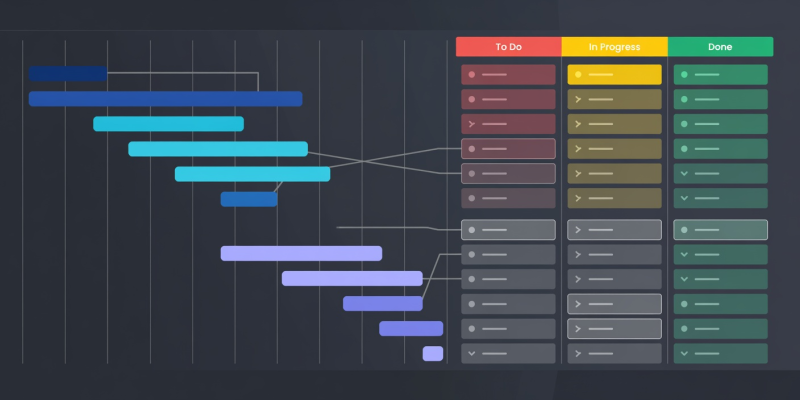
- Kanban / Board-Centric: Status-based vertical columns where cards move horizontally. Excellent for continuous flow processes, poor for long-term capacity planning.
- Timeline / Gantt-Centric: Chronological mapping emphasizing Start/End dates and strict finish-to-start dependencies. Necessary for physical construction or strict phased rollouts.
- List / Hierarchy-Centric: Deep nesting of Epics, Tasks, and Sub-tasks. Optimizes for breaking down massive monolithic projects into molecular units.
- Relational / Database-Centric: Treating tasks as database rows where users can toggle between Board, List, and Timeline views instantaneously via varied SQL-like querying layers.
Workload Balancing and Capacity Planning
The critical failure point of lightweight PM tools is resource management. Creating a task is easy; determining if the assignee actually has the mathematical capacity to complete it within the timeframe is where most systems fail.
Advanced systems implement capacity constraints. They require administrators to input total available working hours for a user, then deduct estimated task hours from that pool. If a user is assigned 50 hours of estimated work in a 40-hour week, the system flags a dependency conflict. Without this architectural layer, a PM tool is merely a digital to-do list, not a management system.
Structural Pros and Cons of Modern PM Architectures
| Architecture Type | Pros | Cons |
|---|---|---|
| Strict Methodology (e.g., Agile Sprint) | Forces disciplined execution; highly predictable outputs. | Fails outside of software development environments. |
| Relational Multi-View | High flexibility; marketing and dev teams can use the same tool. | Requires rigorous internal governance to prevent chaos. |
| Enterprise Portfolio Management | Cross-departmental capacity planning and budget tracking. | Immense configuration overhead; high per-seat licensing cost. |
Evaluation Criteria
When evaluating PM software, do not be swayed by aesthetic dashboard designs. Instead, test the Dependency Logic: if a critical path task is delayed by three days, does the system automatically push all dependent tasks and flag capacity breaches for the newly adjusted dates? Evaluate the Permission Granularity: can external clients view specific tasks without seeing internal commentary or billing fields?
A PM tool's value is directly proportional to its ability to model the actual physical and temporal constraints of your specific workforce.